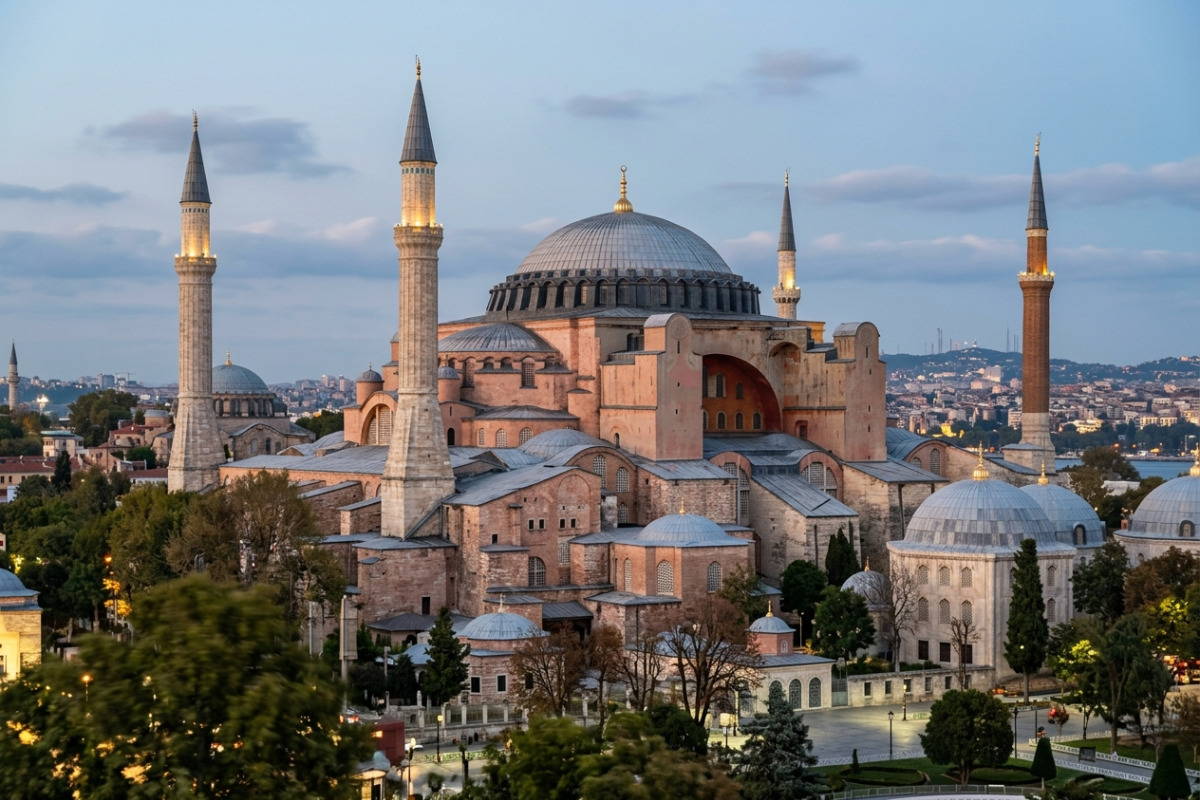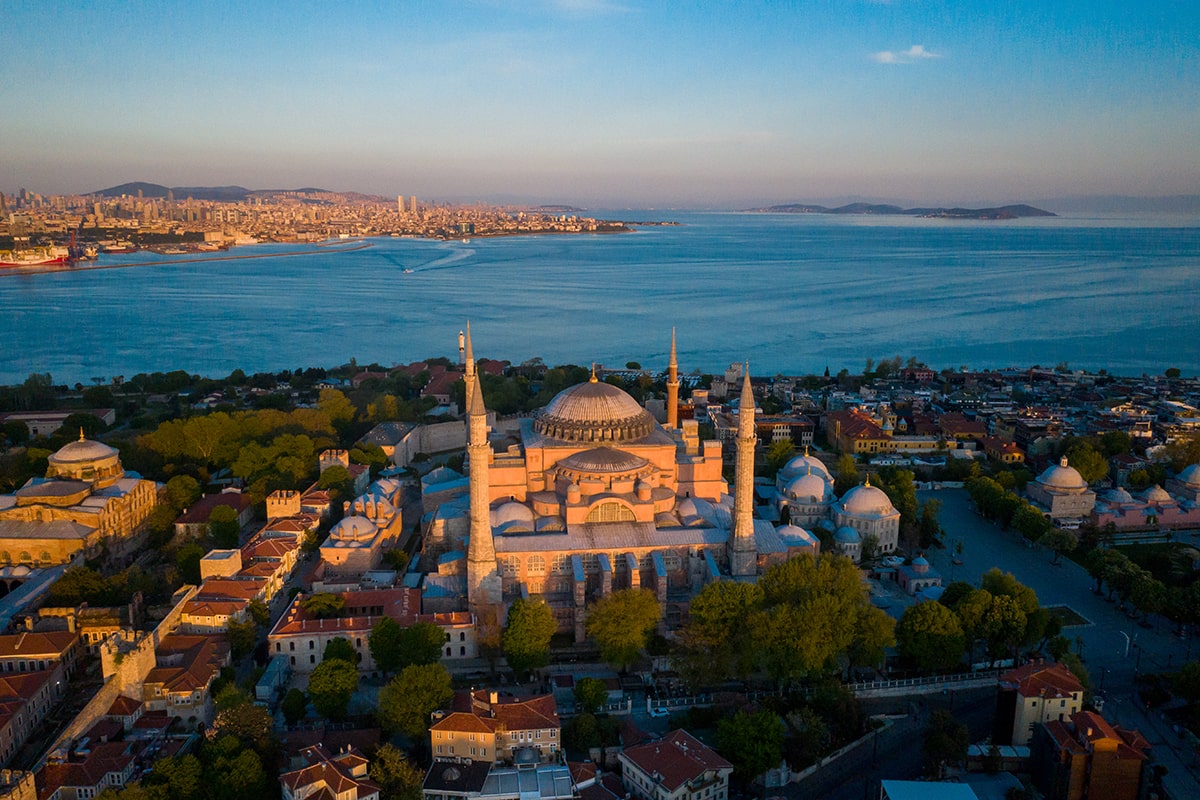
The dome of Hagia Sophia is one of the most awe-inspiring architectural achievements in human history. Rising nearly 56 meters above the ground and spanning over 31 meters in diameter, it has defied gravity, earthquakes, and time for more than 1,400 years. But how did 6th-century architects build something so daring without modern materials or technology? The answer lies in a mix of science, faith, and genius engineering.
A Vision from Emperor Justinian I
When Emperor Justinian I ordered the construction of Hagia Sophia in 532 AD, he envisioned a church that would surpass every other building of its time. He commissioned two brilliant minds, Anthemius of Tralles (a mathematician) and Isidore of Miletus (an engineer and architect), to design a structure unlike anything previously built. Their goal was to create a dome that seemed to float between heaven and earth.
The Revolutionary Engineering
The architects achieved this miracle by placing the dome on four giant pendentives, triangular curved structures that transition the dome’s circular base to the square shape of the supporting walls. This was a revolutionary concept at the time, enabling the dome to rest on just four pillars rather than a full ring of walls.
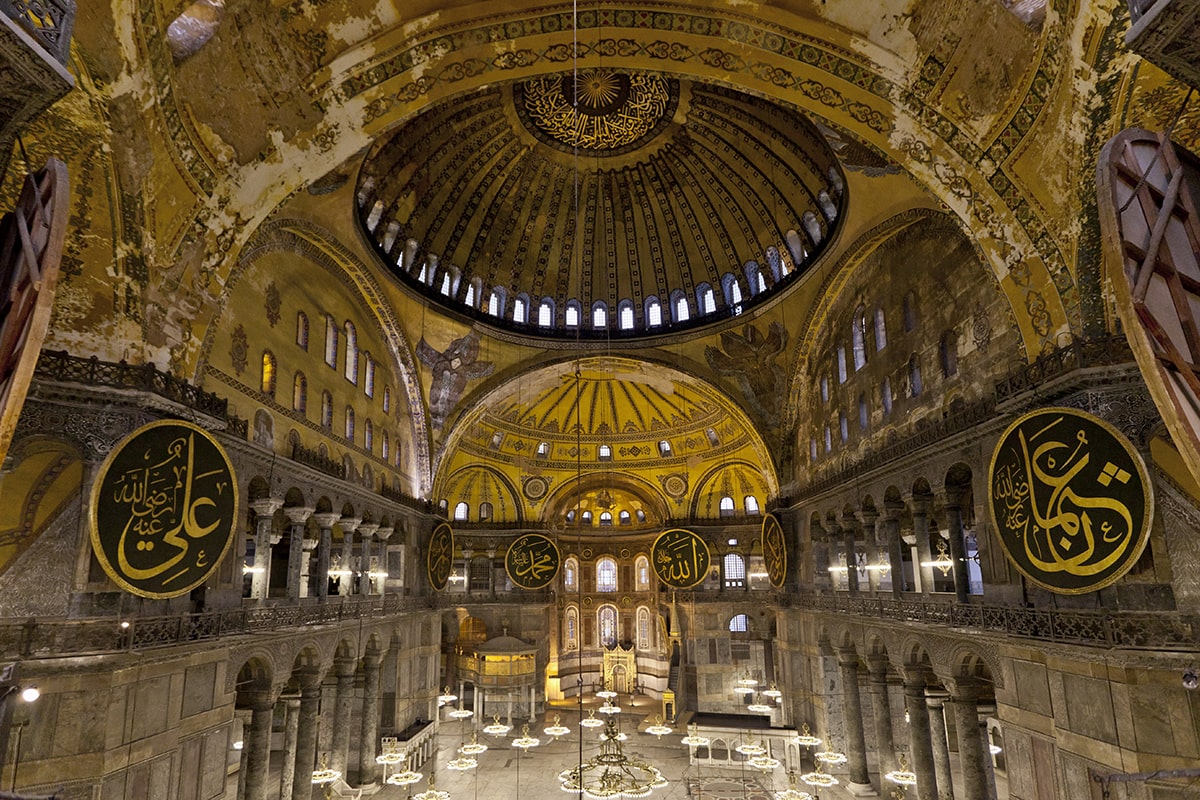
Lightweight bricks made from volcanic ash were used to reduce weight, while hidden tension chains were built into the structure to distribute stress. The dome’s 40 ribs also help channel the weight evenly downward, giving it both strength and flexibility, an ingenious design feature that has helped it survive centuries of earthquakes.
Light That Defies Gravity
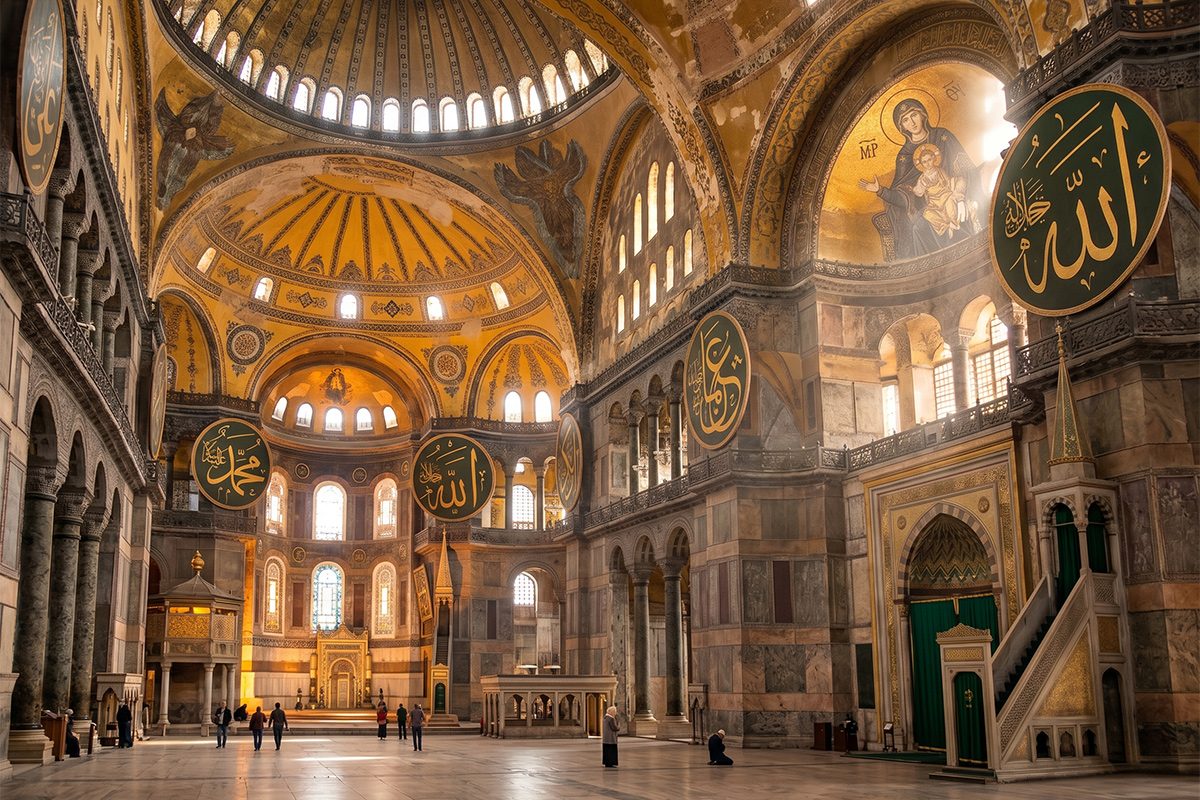
One of the dome’s most enchanting features is the ring of 40-42 arched windows at its base. These windows flood the interior with light, making the dome appear to hover effortlessly in midair. Byzantine chroniclers described it as a vision of the heavens as if the dome were suspended by divine power. Today, that same light still creates a breathtaking sense of elevation and mystery.
Collapse and Reconstruction
The original dome collapsed partially after a massive earthquake in 558 AD. Emperor Justinian immediately ordered it rebuilt, this time with a higher and slightly steeper curve to improve its stability. The redesign, led by Isidore the Younger (the original architect’s nephew), made the dome lighter and more resilient, the version that still stands today.
Over the centuries, restorations by Ottoman architects most notably Mimar Sinan further reinforced the structure. Sinan added exterior buttresses and iron ties, ensuring that the dome would endure future seismic shocks without losing its elegant balance.
The Symbolism of the Dome
Beyond engineering brilliance, the dome carries deep spiritual meaning. For the Byzantines, it represented the vault of heaven, a celestial canopy symbolizing divine order and unity. When the Ottomans converted Hagia Sophia into a mosque, they embraced the same symbolism, adding calligraphic medallions of Allah and the Prophet Muhammad beneath the dome, blending two faiths beneath one divine sky.
Modern Preservation and Lasting Wonder
Today, Hagia Sophia’s dome continues to inspire architects and engineers around the world. Modern laser scans and structural studies reveal that its geometry is still remarkably stable, a testament to the precision of ancient design. Restoration teams use advanced techniques to preserve the structure while keeping its original form intact.
Whether viewed from inside, where light dances across the golden mosaics, or from afar, where it crowns Istanbul’s skyline, the dome remains a masterpiece of both art and science. Its endurance through wars, earthquakes, and empires is proof that true innovation when driven by vision can transcend time itself.
Final Thoughts
The secret of Hagia Sophia’s dome lies not in a single technique, but in the perfect harmony between mathematics, materials, and meaning. It continues to remind the world that great architecture isn’t just built with stone and mortar but with imagination, faith, and the relentless pursuit of perfection.